

Chains is a cover of the Cookies song written by Goffin and King, and sung by George Harrison on the Beatles version which appears on Please Please Me.
 The Beatles Bible
Written by the Brill Building songwriting team of Gerry Goffin and Carole King, ‘Chains’ was recorded during the 13-hour session of 11 February 1963 in which The Beatles recorded the bulk of the Please Please Me album.
 Continue reading on Beatles Bible →
 Wikipedia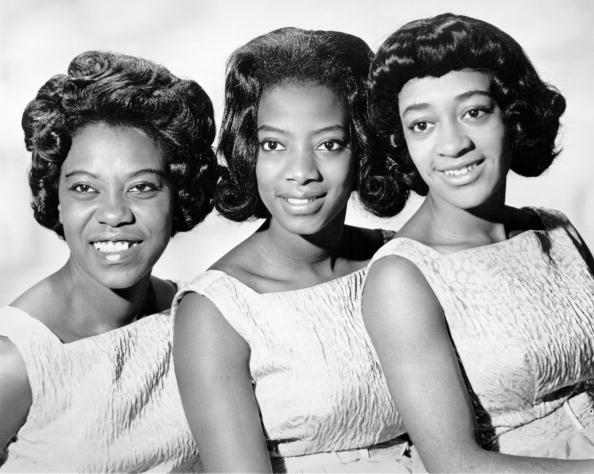
The Cookies were a New York girl group who were important in linking Atlantic records and the Brill Building, acting as backing singers on several hits including Ray Charles’ Drown In My Own Tears and Lonely Avenue, Little Eva’s The Loco-motion and Neil Sedaka’s Breaking Up Is Hard to do. Two members of the original line up of the band performed backing vocals on many Atlantic records and went on to form Ray Charles’ influential backing group the Raelettes, but they only had one minor R&B hit under their own name by 1958. In 1961 a new line up formed from with the remaining member Dorothy Jones joined by Earl-Jean McCrae and Margaret Ross. In this period, the Cookies were working closely with Brill Building teams, recording demos for Aldon Music whose contract writers included Neil Sedaka, Phil Spector, Paul Simon, Barry Mann, Cynthia Weil and Gerry Goffin and Carole King.
Goffin and King (like Mann and Weil) were a married couple who already had a train of hits by 1962 (including US number 1s Will You Still Love Me Tomorrow and Take Good Care Of My Baby). The Cookies had become close to Goffin and King and having introduced them to singer and friend Eva Boyd – Little Eva (the story is explained in Andrew Hickey’s 500 Songs podcast). The songwriting team pushed the Cookies as artists in their own right and gave them Chains, a song originally written for and recorded (but not released) by the Everly Brothers.
The Beatles version is the first time George Harrison’s lead vocal features on an official release (although later on the same album he sings Do You Want To Know Know A Secret). It was the Beatles practice at the time to rotate the lead vocals in their live set, ensuring each singer got their moment in the spotlight (Ringo included). By carrying this approach over to their records, the Beatles were undermining the received wisdom that a commercial band was comprised of a singer and his backing musicians (e.g., Cliff Richard and the Shadows).