
Cry Baby Cry is a track from the White Album. Written by Lennon it was inspired by the wording of an advert, but draws on imagery from a nursery rhyme (sing-a-song of sixpence) and, if I am not mistaken, Alice In Wonderland.
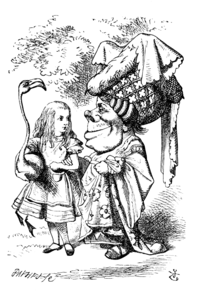
Lewis Carroll’s Alice novels were a longstanding enthusiasm for Lennon and had already influenced I Am The Walrus (referencing the Walrus and the Carpenter from Through The Looking Glass), Lucy In The Sky With Diamonds and his own surreal writing style. Alice In Wonderland has scenes which prominently feature kings, queens, an endlessly crying baby and a Duchess.
 The Beatles Bible
Written by John Lennon while in India, ‘Cry Baby Cry’ recalled the nursery rhymes of his childhood.
 Continue reading on Beatles Bible →
 Wikipedia
The song has an intriguing quality, slightly psychedelic and surreal, but perhaps less so than Lucy In The Sky With Diamonds. Like Glass Onion its lyrics could be mistaken as coded or allegorical, but unlike that song Cry Baby Cry does not seem to be deliberately creating that illusion. Instead it just seems surreal for the hell of it.
Sonically the track lies at about the halfway point between Sgt Pepper and the stripped down sounds on Lennon’s first solo albums, and it falls a little between the cracks. It is interesting that this was the session during which engineer Geoff Emerick left the Beatles, having had enough of the rising tension between the Beatles themselves and between the band and the technical team. The sound does not seem as polished* as tracks on Sgt Pepper and Abbey Road (where Emerick was brought back into the team) although this is common to quite a number of tracks on the White Album. Here the EQ on the piano is rather narrow, cutting out the high and low frequencies so that it sounds a little like its being played down the telephone or through some small loudspeakers. When the lead guitar comes in, it’s a little difficult to hear distinctly from the piano. The drums are also rather trebly and distorted. Perhaps these are all intentional decisions, but they rather extreme and perhaps take away from the potential of the song, rather than adding to it.
The Beatles themselves do not seem quite as fully engaged as they would normally be. Although the band had previously recorded around 30 takes, and were thus fairly well practiced, the arrangement seems a little unfinished, both bass and drum parts not quite perfected to their usual seamless standard.
One nice touch is the addition at the end of the song of a fragment of McCartney’s Can You Take Me Back? which is effectively an unlisted bonus track leading immediately into Revolution 9. I always tended to see Can You Take Me Back? as part of Revolution 9 rather than Cry Baby Cry, but either way it has a strange quality. It always made me think “I’ve heard this somewhere before, I can’t put my finger on it”. It leaves me with that odd déjà vu sensation and then we are straight into Revolution 9 (I listened all the way through this morning) and overall the sequence of Cry Baby Cry – Can You Take Me Back – Revolution 9 creates such an unsettling feeling that it is always hard to think of Cry Baby Cry in isolation.
*
I tried listening to the 2009 remaster, based on the original stereo mix (the 2018 mix is quite different), on several different headphones, and I got different results with each set. It’s characteristic of a good mix, and most of the Beatles post 1965 output, that it translates well to different devices; that’s not the case here. The different sensitivities of different speakers and headphones emphasize different elements of the mix.