

 The Beatles Bible
Written mainly by Paul McCartney, ‘Tell Me What You See’ was first released in the UK on the Help! album, and in the US on Beatles VI.
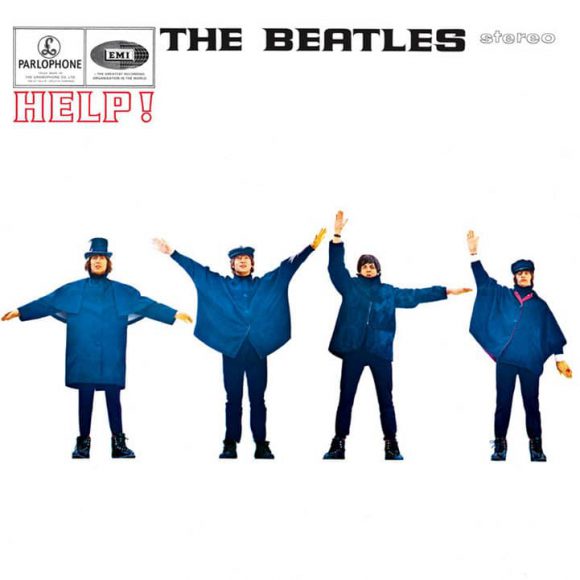 Continue reading on Beatles Bible →
 Wikipedia
It’s difficult to work up much enthusiasm for this track from the Beatles 1965 Help! album. It seems to have been written mainly by McCartney with input from Lennon.
At least some of the lyrics come from Lennon, as explained in the Beatles Bible article (and also in a nearly contemporary paywalled article by Newsweek writer Michael Lydon), Lennon had remembered a inspirational quote that had hung in his childhood home:
“However black the clouds may be, in time they’ll pass away. Have faith and trust and you will see, God’s light make bright your day.”
These were adapted to make the lyrics of the second verse of Tell Me What You See and also appeared in Jabberwocky form in Lennon’s book In His Own Write:
“However Blackpool tower may be, in time they’ll bass away. Have faith and trump and B.B.C., Griff’s light make bright your day.”
However in the authorized Many Year’s Ago biography McCartney says
“I seem to remember it as mine. I would claim it as a 60-40 but it might have been totally me. Not awfully memorable.”
They saw this song as an album filler, and I agree it is not very memorable. However, it’s worth noting that this and similar “filler” tracks had to have had sufficient work put into the arrangement, performance and recording to earn their place on a Beatles album. For example, this song has some nice harmonies that add variation to the verse. Then for contrast in the chorus (if you can call it a chorus) they make a virtue of the Gregorian melody in the line “Open up your eye’s now” by creating a distinctive drone-like unison vocal texture. They add their sound-of-the-month-1965 electric piano. There’s a nice little piano/drum break that acts like a mini hook a couple of times in the song, and they use quasi Latin percussion – claves and guiro – which gives a lighter sparse feel and contrasts with the slightly rockier drum break. Unless I am missing something, it’s hard to pigeonhole as belonging to a particular genre. It’s a Beatle record and it has something original about it.
Comparison with contemporary album tracks
My instinct at this stage is to say something like: “the Beatles’ ‘fillers’ and b-sides could easily be better than 90% of recorded music at the time”. And I think that’s probably true, but – since I wasn’t alive I thought I should actually look into the quality of some contemporary weaker album tracks. Now it would be impossible to do an unbiased and systematic investigation, but I did track down recent albums by artists who recorded the top selling songs of 1965 (in the US Billboard top 100). Ignoring one-hit-wonders, these were: Four Tops, The Rolling Stones, The Righteous Brothers, Petula Clark (mainly a singles artist), The Beatles, Herman’s Hermits, Elvis Presley, The Temptations and The Beach Boys. Note that this is already an elite group!
Of these, several artists’ albums relied heavily on songs written by others – professional songwriters and covers, this certainly includes The Righteous Brothers, Herman’s Hermits and Elvis. The Rolling Stones too, had not really begun writing much of their own material. These artists could (and did) carefully select the songs they worked on – so in principle they could avoid filler but were not actually creating original material themselves.
Elvis hadn’t produced a studio album for some years, and his movie soundtracks are probably not representative in that the songs were picked to support the movie narrative rather than the artists own intent (what a terrible waste!) Here’s an example. It’s not so much that this is a weak song, but it is a pastiche of what Elvis had already been doing for about 8 years.
Petula Clark* co-wrote a few of her songs, but did not release many albums and seemed focussed on her singles, so it’s probably unfair to compare her albums to the Beatles’.
Here’s an example of one of Petula Clark’s “weaker” album track/b-sides from the period:
Again it’s not so much a weak song/recording but a very different easy-listening genre meant to appeal to a different audience.
The Motown groups Four Tops and the Temptations are a bit of a special case. They generally did not write their own material, but were part of a literal hit factory where the artist was just the outward facing part of a coherent and strategic project. So in these cases, perhaps the writing teams (Four Tops: mainly Holland-Dozier-Holland, Temptations: mainly Smokey Robinson, Berry Gordy) can be fairly compared with the Beatles. The Beach Boys were even more directly comparable to the Beatles in that their songs were mainly written by Brian Wilson with contributions from Mike Love (now co-credited after a 1990s awsuit) and other members of the band. Having had a listen to the weaker (at least less streamed) album tracks on these records I think that the Four Tops and the Beach Boys weaker songs were noticeably “better” than Tell Me What You See and the Temptations were at least in the same ballpark.
Here’s an example of an album track from the Four Tops’ first album (actually written by Hunter and Stevenson). There doesn’t seem to be much, if any, filler on this album.
Here’s an example of an album track from the Meet The Temptations written by Smokey Robinson (who is a truly brilliant songwriter). Apples and oranges, but I could easily be persuaded it’s better than Tell Me What You See to be honest.
Here’s an example of one of the Beach Boys weaker album tracks from the period:
To me, it is a great song, a bit ahead of its time – maybe a few rough spots with the lyrics but it has an underlying concept/purpose that is missing from Tell Me What You See.
These artists all had strong arrangements that took even their weakest songs seriously. So the Beatles were roughly aligned with their peers and they needed to be on their mettle to keep up with the best and most commercial albums of the time, but of course this is already a very select group.
*
I think Petula Clark was the first celebrity/singer I took an interest in – I can remember “liking” her as a very little boy (maybe 5 years old). Make of that what you will!