

 The Beatles Bible
George Harrison’s second composition for the Help! album, ‘You Like Me Too Much’ was recorded for inclusion in the film of the same name, although it was later relegated to the second, non-soundtrack, half.
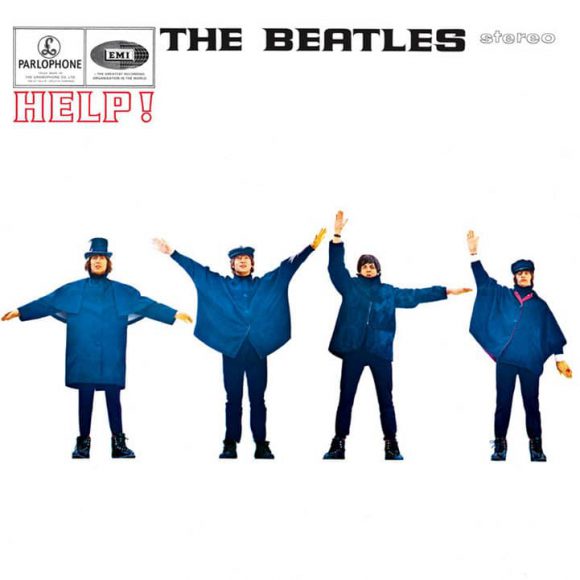 Continue reading on Beatles Bible →
 Wikipedia
You Like Me Too Much is a Harrison composition from the Help! album. It was his third Beatles original – Don’t Bother Me featured on With The Beatles, and he also had another (better) song on Help! – I Need You. So this was the first time George Harrison had contributed more than one song to an album. George was beginning to make a more significant contribution as a songwriter and this was (broadly) to continue.
However, working with Lennon and McCartney he still had some catching up to do. I mean this literally in the sense that this song has characteristics of their earlier work, while they had by 1965 started to forge ahead with new ideas. At this stage, in my view Harrison was gaining confidence and has written a (kind of) love song that was very much in keeping with what Lennon and McCartney had achieved in around 1962/63. It has been slightly updated with the inclusion of the Beatles then current country flavour and addition of electric piano. But in other respects sounds a bit like a “merseybeat” record and, come to think of it, you could easily imagine, say, Gerry and The Pacemakers performing it.
Psychologically George was in a weird position. On the one hand he was one of the most famous people in the world, successful, handsome etc. On the other hand within his own tightknit peer group he was the youngest and (perhaps like younger “siblings” the world over) had found himself typecast and patronised in this junior role long after he’d grown up.
Paradoxically this may have held him up a bit, as the frustration and contradictions of his situation perhaps bled into his lyrics, which often had a negative, cynical or critical edge to them: “don’t bother me, leave me alone”, “you’ll never leave me, you like me too much”, a strange combination of brash and defensive perhaps? Maybe this reflects his situation, maybe his personality, or maybe I am projecting patterns onto essentially meaningless words. However, It’s notable that this apparent cynicism gradually evaporated so that by the time of the break-up his songs are increasingly open-hearted. Additionally Harrison’s later songs put more emphasis on lead guitar, achieving emotional expression musically and instrumentally as much as lyrically. Partly this reflects his development as a musician, partly the genre itself was evolving from “pop” to “rock”; Harrison was part of this evolution. In any event those later Harrison songs are now amongst the Beatles’ most popular e.g., Here Comes The Sun has been streamed well over a billion times on Spotify.
So my take on You Like Me Too Much is that it catches George on this trajectory. In my view in 1965 he was writing well-structured accessible songs that would have compared favourably with Lennon-McCartney songs on Please Please Me (better than Love Me Do, for example). But at this stage, the Beatles* saw him as a step or two behind. Ultimately he would have to let go of the comparison and find his own direction as a songwriter.
*
Yes, I sometimes refer to “the Beatles‘” perceptions in a context like this where one member is being perceived by the group.
Strange as it is, I think this accurately reflects the way they thought and acted at times as a group rather than individuals. So you can have a situation where, say, George is being seen by the Beatles, and I mean the Beatles – George is also one of the Beatles – not just the rest of the Beatles or just John and Paul. Of course each individual would also have their own (possibly contradictory) thoughts and attitudes.