
 The Beatles Bible
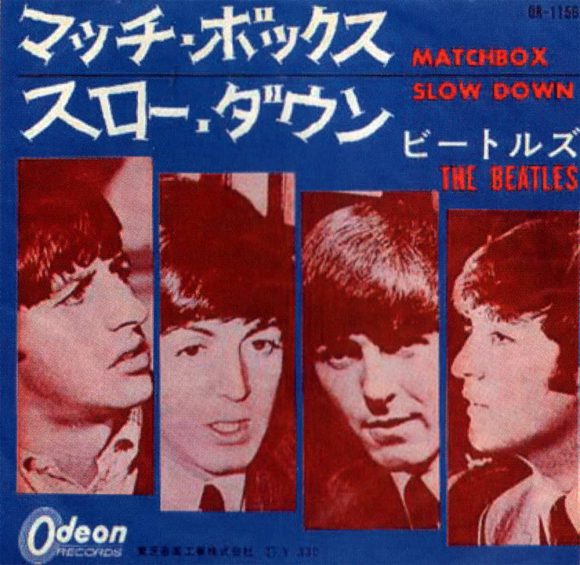
The Beatles’ cover of Carl Perkins’ 1956 hit ‘Matchbox’ was first released in the UK on their Long Tall Sally EP, and in the US as a single, coupled with ‘Slow Down’. It was also released on the Something New album.
 Continue reading on Beatles Bible →
 Wikipedia
Like Honey Don’t, Matchbox is a cover of a Carl Perkins song which became part of the Beatles Cavern set in the early 60s.
According to the beatlesbible.com page it was originally sung by Pete Best, before John Lennon took it over after Best’s sacking. On the recorded version the lead vocal was again taken by Ringo. For me it’s a stronger song and a stronger performance than Honey Don’t.
The original itself has an interesting backstory that is covered in Andrew Hickey’s (excellent and recommended) 500 songs podcast:
I think I first heard the song on the Beatles Rock’n’Roll Music compilation album – a post-Beatles hotch-potch, but I think it was cheaper than the Red and Blue albums when I was a teenager. It was originally released on the 4 track Long Tall Sally EP in 1964.
My impression is that the Beatles EPs and singles did not survive the sixties as often as their albums, and so these tracks have tended, in my lifetime, only to be heard in the context of compilation collections. Growing up I did access to some of my parents’ original LPs and a kind Canadian neighbour once gave me some of her Capitol albums.
Part of the fascination with the Beatles for me is seeing how they evolved over time. This is very clear in the UK albums and less clear in the singles, EPs and US releases, as they tend to be encountered out of sequence and because of the way the Beatles reserve a different kind of song for singles v LPs.