

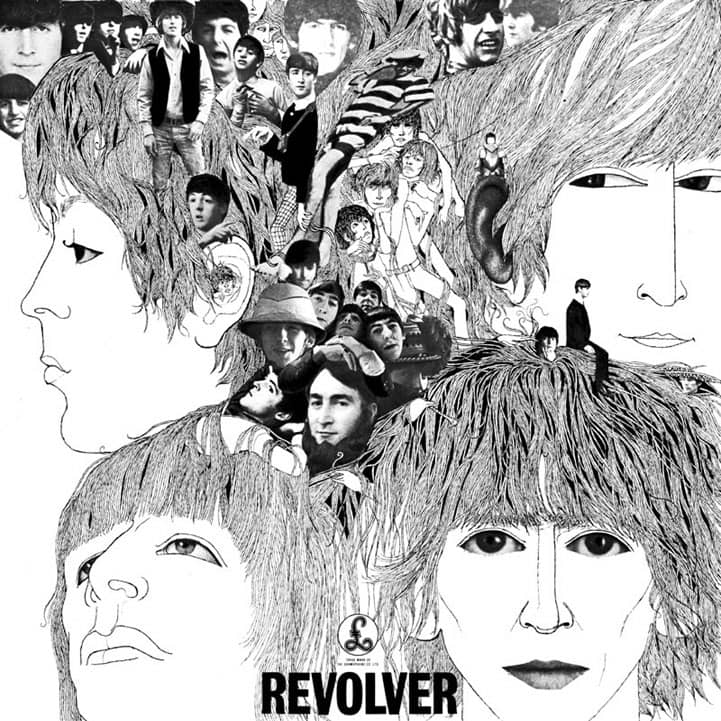
I Want To Tell You is a track from Revolver, written by George Harrison. It is an excellent example of the progress Harrison was making with his songwriting during this period.
 The Beatles Bible
‘I Want To Tell You’, George Harrison’s third song on Revolver, was, he later said, “about the avalanche of thoughts that are so hard to write down or say or transmit”.
 Continue reading on Beatles Bible →
 Wikipedia
The Beatles global fame and fanbase may have peaked around 1965, at which point they had broken America, produced two films and continued a punishing international touring schedule. But in terms of creativity and influence with musicians, they were still on a rising trajectory. The very peak of the Beatles’ musical innovation came between 1965 and 1967 with the releases of Rubber Soul, Revolver and Sgt Pepper. Although other Beatles records were certainly influential, these records became part of the foundation of modern rock genres. The new musical, conceptual and technical approaches they sparked were adopted much more widely, becoming much so familiar to later generations of listeners that it is now hard to fully appreciate in retrospect the way their striking originality would have felt at the time.
George Harrison had three tracks on Revolver. Taxman, Love You To, and I Want To Tell You. Harrison’s songs each make important contributions to the overall flavour of the album which must have struck contemporary listeners as new and vibrant.
What I like best about I Want To Tell you is its catchy opening riff, which is comparable with riff-based Lennon-McCartney’s songs of the period (I Feel Fine, Ticket To Ride, Day Tripper, Paperback Writer). Unlike those songs, Harrison doesn’t dwell for too long on the instrumental hook, instead moving through verses that are much less poppy and much more dissonant. My personal instinct is that the song is less attractive and engaging than it might have been, but that instinct is to miss the point, and the significance of the song. The dissonance of the main verse/bridge sections is a very deliberate creative choice, purposefully aligned with the meaning of the song. It is something Harrison was proud of, and in my view it is quite characteristic of the way he’d find musical solutions to the challenge of conveying complex or troubling emotions where words are not sufficient. As the lyrics put it:
I want to tell you
My head is filled with things to say
When you’re here
All those words, they seem to slip away
George explained the musical process in a rather brilliant, perceptive interview in Guitar World conducted by Vic Garbarini in 1992*:
VG: When you did that tour with Eric Clapton in Japan, you opened with “I Want To Tell You,” from “Revolver.” The song marked a turning point in your playing, and in the history of rock music writing. There’s a weird, jarring chord at the end of every line that mirrors the disturbing feeling of the song. Everybody does that today, but that was the first time we’d heard that in a rock song.
Harrison: I’m really pleased that you noticed that. That’s an E7th with an F on the top, played on the piano. I’m really proud of that, because I literally invented that chord. The song was about the frustration we all feel about trying to communicate certain things with just words. I realized the chords I knew at the time just didn’t capture that feeling. So after I got the guitar riff, I experimented until I came up with this dissonant chord that really echoed that sense of frustration. John later borrowed it on “Abbey Road.” If you listen to “I Want You (She’s So Heavy)” it’s right after John sings “it’s driving me mad!” To my knowledge, there’s only been one other song where somebody copped that chord – “Back on the Chain Gang” by the Pretenders.
I am not sure about the specific chord, but the general practice of using dissonant chords (and correspondingly brittle, fractured and jarring lead lines) to capture frustration, tension and other hard-to-name emotions is now fairly common. No doubt others, certainly including Jimi Hendrix, played an important role, but the Beatles played a part in this evolution. As well as Harrison, McCartney and Lennon both also experimented with harsh, aggressive or dissonant guitar parts on various tracks. Their sound reminds me of some of the techniques later expanded by Blur’s Graham Coxon, Radiohead, or in a lead context by Robert Fripp. These amazing textures and the much more expansive forms of”rock” they helped define a least a little to George Harrison and Revolver.
*
The interview is very difficult to track down on the internet, but user bewareofchairs has transcribed it on the Beatles Bible Forum. https://www.beatlesbible.com/forum/george-harrison/george-interviews/ Based on its alignment with snippets published elsewhere in authoritative sources I am reasonably confident its accurate.