

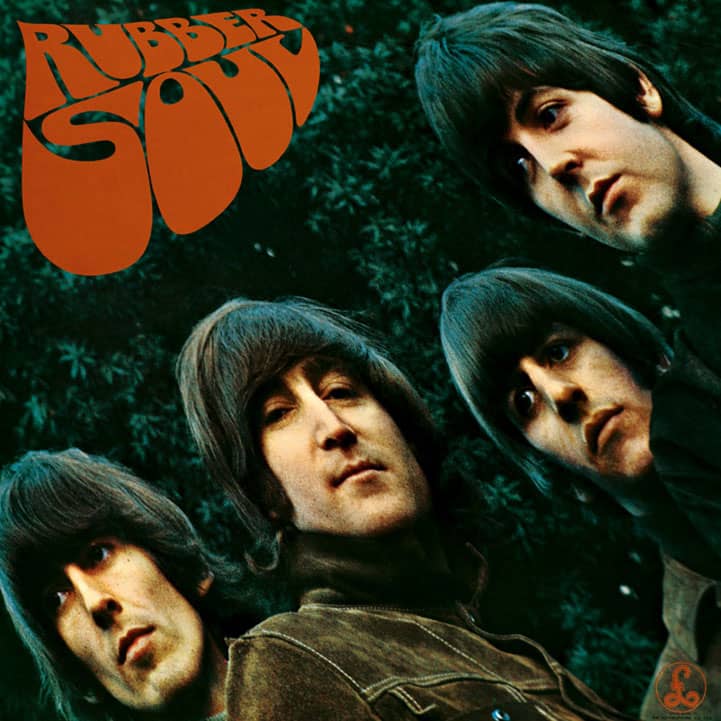
If I Needed Someone is one of two George Harrison songs on Rubber Soul (the other being Think For Yourself). The story of this track sheds light on George’s continued growth as a songwriter, his relationship with other artists and aspects of his personality as he came to terms with fame.
 The Beatles Bible
Inspired by Roger McGuinn’s guitar work for The Byrds, ‘If I Needed Someone’ was written by George Harrison and first appeared in the UK on the Rubber Soul album.
 Continue reading on Beatles Bible →
 Wikipedia
Musically the song is another step forward from previous Harrison compositions. Like Lennon-McCartney’s earlier I Feel Fine, Ticket To Ride, and the contemporaneous Day Tripper it is based around a riff. I think the song is influenced by all three. The sound of the riff has most in common with Ticket To Ride, but the backing vocal arrangement during the instrumental section and outro is reminiscent of the corresponding section of Day Tripper.
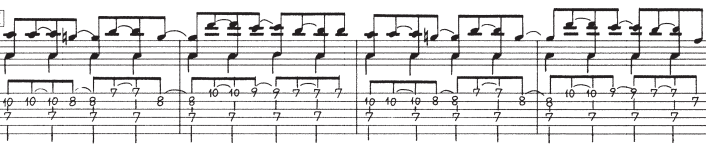
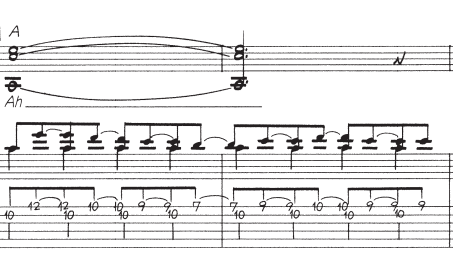
The song has a distinctive approach to melody and harmony that is characteristic of Harrison songs and in this case a dreamy quality that is due to the use of the Myxolydian mode, with the same “drone” notes are returned to, even while the chords change. This effect is emphasised by McCartney’s well-judged bass line which also stays on the same pattern all the way through the verse:

It’s a very mid-late sixties sound – one of the elements that would come to be associated with psychedelia, and an important contribution to the overall colour of the album and the Beatles’ sound moving forward.
Ian McDonald has suggested that the modal flavour of the song was an early result of George’s exposure to Indian music, but I think it’s as likely that he already favoured this kind of harmony, and later recognized it in the Indian music he came to love.
“… somewhere down the line there was a point where I heard Ravi Shankar’s name, and then I heard it again, and then the third time I heard it I thought, “Wow, this is like a funny coincidence, this name Ravi Shankar.” And I talked about him with Dave Crosby from the Byrds. And he mentioned the name. And I said, “Yeah I keep hearing this name—I’ve gotta get a record.” I went and bought a record; I put it on, and it just seemed to me like it hit a certain spot in me that I can’t explain. My intellect didn’t really know what was going on, but it just hit a spot where it seemed very familiar to me. The only way I could describe it was my intellect didn’t know what was going on musically, and yet this other part of me really identified with it.”
I mean, I’m not sure, maybe I’d heard it. We used to have shortwave radios, you know, when I was growing up, and all evening the radio would be on, and my mother was always tuning it into all kinds of weird—whatever you could pick up on it. So maybe I’d heard it from Algeria or somewhere, or maybe I heard it in some other lifetime! Who knows? It was something that was like it just called on me, and I just heard it, and I felt very familiar with it.
(George Harrison in a 1992 interview with Timothy White in George Harrison on George Harrison: Interviews and Encounters edited by Ashley Kahn)
Byrds’ Influence
Although, in my view Lennon-McCartney were the main influences on Harrison’s songwriting at this stage (as you might expect), like them Harrison was always very open about his inspiration from other artists. In this case he explicitly recognized the Byrds and Roger McGuinn’s adaptation of the Bells Of Rhymney as the source of the riff, and like on this song Harrison uses the Byrds’ signature sound, the 12 String Rickenbacker.
The Byrds and the Beatles had a reciprocal influence on one another. I pointed out in an earlier post that their jangly guitar sound and riff on Mr Tambourine Man may owe something to What You’re Doing. The combination of trebly tones and riffs were in the zeitgeist (the Searchers Needles and Pins is an even earlier example) and the Beatles and Byrds were fuelling one another.
Clash with Nash
Before the release of Rubber Soul, The Hollies had also recorded a version of If I Needed Someone which they planned as a single, having received a demo version of the song via George Martin and their producer Ron Richards. In the event the Hollies’ single and the Beatles’ album were released on the same day. Harrison publicly criticised the Hollies’ version in the NME:
“Tell people I didn’t write it for The Hollies. It’s called ‘If I Needed Someone’ and they’ve done it as their new single; but their version is not my kind of music. I think it’s rubbish the way they’ve done it. They’ve spoilt it! The Hollies are all right musically, but the way they do their records they sound like session men who’ve just got together in a studio without ever seeing each other before.”
This drew a strong response from the Hollies’ Graham Nash:
“If we have made such a disgusting mess of his brainchild song, will he give all the royalties from our record to charity? One thing: I’m bloody sure, I don’t want ‘If I Needed Someone’ released in America as our next disc. ‘Look Through Any Window’ is our biggest seller over there at the moment, and we’re naturally looking for a follow-up. Normally, this would be it. But not now. It’s a matter of principle.”
This then led to a bit of a feud between the two bands. The Beatles were in another league in terms of success, and at that stage the Hollies were not often recording their own material. They had given Harrison his first hit (UK number 20) as a writer, and he acted rather gracelessly in criticising the record so bluntly. I think this may reflect a bit of a mismatch between Harrison’s perception of himself versus others’ perception of the Beatles. As the youngest of the Beatles and least experienced and successful of its three songwriters, he was probably rather insecure and defensive, and possibly a bit naïve about the business of songwriting; If he’d just kept his mouth shut, the Hollies record might have been more successful in the UK and released in the US, potentially earning George a lot of money. He would have also avoided coming across as arrogant and dismissive of fellow musicians. The Beatles were in a class of their own and experiencing unprecedented fame and adulation around the world, and their peers generally respected and admired them, so Harrison’s remarks would have seemed, to use a footballing analogy, like showboating – disrespecting a fellow professional by humiliating them publicly.
Nash certainly took in this way, but continued to respect the Beatles as musicians:
“My opinion of the Beatles as a group hasn’t changed. I still think they’re great, and I’m not going to say anything stupid like: ‘I’ll burn all their records in my collection,’ or ‘I’ll never buy a Beatles record again. No. I like their music. But knocking comments like the one about us are a load of ____.”
Punching Down
As well as perhaps feeling like the underdog within the Beatles, and thus over-defensive, Harrison as a younger man could be blunt and inconsiderate. This was to change in the later sixties but as Cynthia Lennon explains (my emphasis):
Previous to George’s experiences with LSD and the subsequent flower power explosion, he had been the most tactless, blunt and often pig-headed of the four Beatles. George of course was the youngest and least mature, but to me he was the one Beatle who altered most in character and temperament over the years. He grew up very quickly, changing from a tactless youth into a sensitive, thinking individual.
Part of what was seen as the Beatles’ charm came from their witty put-downs and repartee when “punching up” *e.g., at the press) in their earlier years. At this stage, Harrison’s straight talking had been part of the band’s appeal. But he may not have realized – or perhaps he didn’t care – that, by 1965, with the Beatles stratospheric status he was now more often in danger of “punching down”.
Take It Or Leave It
The lyrics of If I Needed Someone perhaps also reveal something of Harrison’s personality. As Robert Fontenot puts it:
“The lyrics of this song are representative of the change in the Beatles’ outlook and also of its era: tender but ambivalent, they have suggested to more than one listener a song to a groupie or some other attempt by the singer to juggle two affairs at once.”
This ambivalent, relaxed, even complacent attitude seems true to his character, and perhaps not too hard to understand as he would have had potential partners (perhaps literally) lining up, having recently committed to future wife Pattie Boyd.
The key word is “If”. If I needed someone… maybe you would get a call. By using the conditional mood, Harrison is not just delivering a straightforward love song, but something a bit different. It’s the type of shift that might be given more credit in a Lennon-McCartney song (e.g., compare the much-praised shift to the use of the third-person in She Loves You). That said “If” songs are not entirely new, even to the Beatles. Lennon had already written the beautiful If I Fell for the the Hard Day’s Night album, and “if” songs – if not exactly standard – were also found in pre-rock’n’roll songs such as Doris Day’s If I Give My Heart To You or Nat King Cole’s When I Fall In Love; all these examples though use “If” to express wary longing, rather than a non-committal “maybe, I suppose”, so Harrison’s approach is original, if less compelling.
[Note: I accidentally wrote this entry out of sequence – when I should have been writing the song ranked 113.]