
Magical Mystery Tour was the title track of the Beatles December 1967 TV special originally released in the UK as part of a soundtrack double-EP*. The song was an early component for McCartney’s concept for a movie project, and was seems to have been largely written by McCartney with some lyrical contributions from the band and others.
 The Beatles Bible
Recorded just four days after the completion of the Sgt Pepper album, ‘Magical Mystery Tour’ was Paul McCartney’s attempt to maintain momentum within The Beatles and to give them a new direction and sense of purpose.
 Continue reading on Beatles Bible →
 Wikipedia
The film had been conceived in early 1967, with the title track recorded in April, but the idea was then put on ice as the Beatles pursued other enthusiasms after the May release of their opus, Sgt Pepper’s Lonely Hearts Club Band. After Brian Epstein’s death in late August the Beatles were stunned and disorientated. Epstein had taken responsibility for initiating tours, recording and film projects, while the Beatles had focussed on writing and performing. With Brian gone, there was a vacuum. McCartney’s response (perhaps mirroring the way he had coped with his mother’s death and would later cope with Lennon’s murder) was to bury any emotional response and focus on immediate practical problems. At a meeting at McCartney’s house just five days later, the Beatles agreed to press ahead with Magical Mystery Tour:
I was still under a false impression. I still felt every now and then that Brian would come in and say, ‘It’s time to record,’ or, ‘Time to do this.’ And Paul started doing that: ‘Now we’re going to make a movie. Now we’re going to make a record.’ And he assumed that if he didn’t call us, nobody would ever make a record. (John Lennon, Anthology)
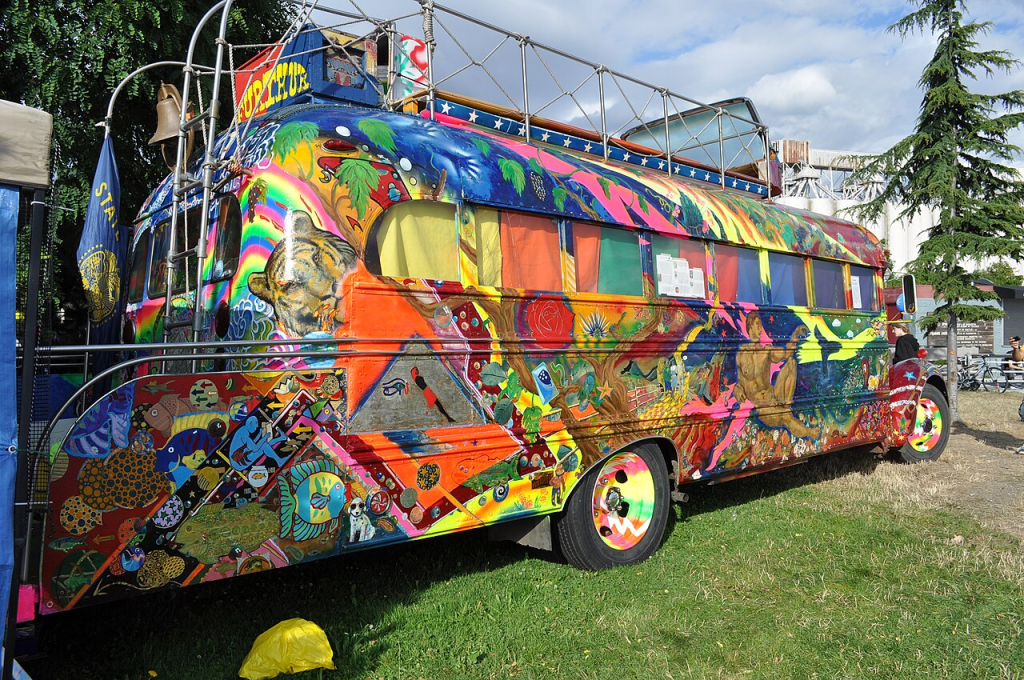
The idea for the film had been partly inspired by the Merry Pranksters, a group of proto-hippies who criss-crossed the United States in a psychedelic painted bus laden with LSD, as immortalised in Tom Wolfe’s book The Electric Kool-Aid Acid Test. McCartney combined this idea with his own childhood memories of mystery tours in Northern England: these were unglamorous but enjoyable coach outings with drinking and singing. The “mystery” destination almost always turned out to be a fairly nearby seaside resort. So the “Magical Mystery Tour” of the title might could be a not-so-subtle reference to an acid trip; “everything is changing… the magic is starting to work”, and so on.
“John and I remembered mystery tours, and we always thought this was a fascinating idea: getting on a bus and not knowing where you were going. Rather romantic and slightly surreal!”
“Because those were psychedelic times it had to become a magical mystery tour, a little bit more surreal than the real ones to give us a licence to do it.”
“Magical Mystery Tour was the equivalent of a drug trip and we made the film based on that.” (excerpts from McCartney’s account in Barry Miles’ Many Years from Now authorised biography, see the excellent Beatles Bible article for more)
The song, recorded immediately after completion of Sgt Pepper when the Beatles were on a roll, is a success. It is a very functional title song that has the purpose of gathering the audience and generating a sense of anticipation and excitement. McCartney is great at creating these structural elements title songs, openings and endings that give satisfying shape to a bigger project. Magical Mystery Tour fulfils a similar role to the title song of Sgt Pepper’s Lonely Hearts Club Band, right down to McCartney’s master of ceremonies announcement and brass fanfares. I have always loved the drums on this, there’s an irresistible energy to the part, and again it’s reminiscent of the same sort of effect Ringo achieves on (the reprise of) SPLHCB, this time underlined by the dramatic tempo changes.
The film was largely improvised with direction and editing overseen by the Beatles and McCartney taking a leading role. It was not so successful and was panned by critics after being shown on BBC TV over the Christmas holiday period. This was the Beatles’ first experience of a less than fantastic reception for their work; since Please Please Me it had been an ever-accelerating curve of ever greater commercial and artistic success – now they seemed to stumble. It was a chastening experience and McCartney felt obliged to appear on the David Frost show, effectively to apologize.
You gotta do everything with a point or an aim, but we tried this one without anything, with no point and no aim. It’s like, you know, we make a record album and all the songs don’t necessarily have to fit in with each other, you know. They’re just a selection of songs. But when you go to make a film, I don’t know, you seem to have to have a thread to pull it all together.
When we were making it, I think all of us thought, ‘This has got a very thin plot. We hope this idea of doing a thing without a plot works, because the one thing we’re gonna be able to say is, it hasn’t got a plot.’ But yeah. We thought, ‘You don’t need a plot. You don’t always need one.’
(McCartney speaking to David Frost)
We don’t say it was a good film. It was our first attempt. If we goofed, then we goofed. It was a challenge and it didn’t come off. We’ll know better next time. (Paul McCartney)
… it wasn’t a brilliant scripted thing that was executed well. It was like a little home movie, really. An elaborate home movie. (George Harrison)
The Beatles had, for the first time, bitten off more than they could chew, but without Epstein and with McCartney taking the reins, they were not willing to listen to advice to pull the plug on the project.
When Magical Mystery Tour was finally finished, Paul screened it for everyone at NEMS. The reaction was unanimous: it was awful. It was formless, disconnected, disjointed, and amateurish. I told Paul to junk it. “So what, we lost £40,000,” I said. “Better to junk it than be embarrassed by it.”
But Paul’s ego wouldn’t let him consider this. He was positive that Magical Mystery Tour would be as warmly greeted by the public as all the Beatles products that came before it. (Peter Brown)
Perhaps lulled into a sense of overconfidence after years of success, McCartney had underestimated the challenges of working in a new medium with a heavy emphasis on narrative, and of orchestrating a complex project involving large numbers of people, locations, tight budgets and deadlines. But perhaps the critical reception was a little unfair. Although lacking narrative, some musical elements of the film worked reasonably well as an extended promo video (admittedly over-extended) and though lacking the the sharp comedy writing, the surreal situations and editing seem to foreshadow the approach taken by the Monty Python team a few years later.
The Beatles success always hinged on their ambition to exceed themselves creatively and to do this they had to continually push the boundaries of what they attempted. When it went wrong, as it did with Magical Mystery Tour, Apple and Let It Be, that ambition seems like a mistake, hubris. Maybe there was a little of that. But it is perhaps just a side-effect of the same creative ambition and risk taking that fuelled their greatest successes.
*
The Magical Mystery Tour records have an unusual place in the Beatles catalogue. In the US the songs from the EP were released on a Capitol album that additionally included the Beatles 1967 singles Strawberry Fields Forever/Penny Lane, All You Need Is Love/Baby You’re A Rich Man, and Hello Goodbye (whose B-side, I Am The Walrus, was already in the soundtrack). In later years when the Beatles music was rereleased for CD, the Capitol album was made part of the official international catalogue (whereas other albums were based on Beatles-supervised UK releases).